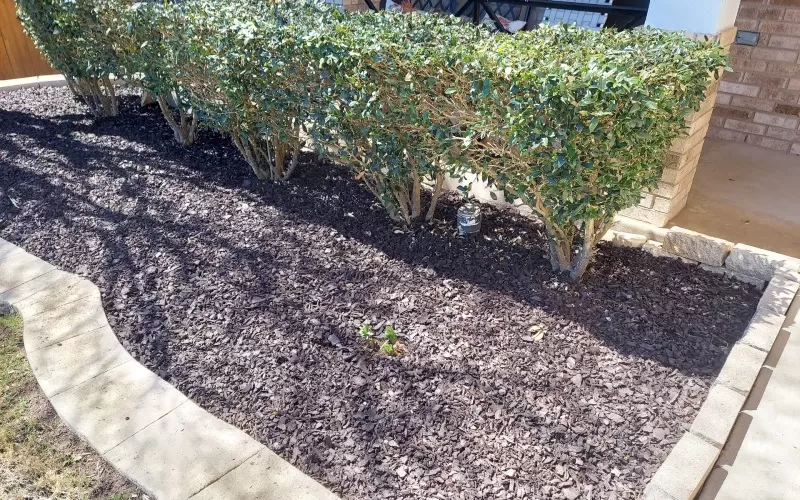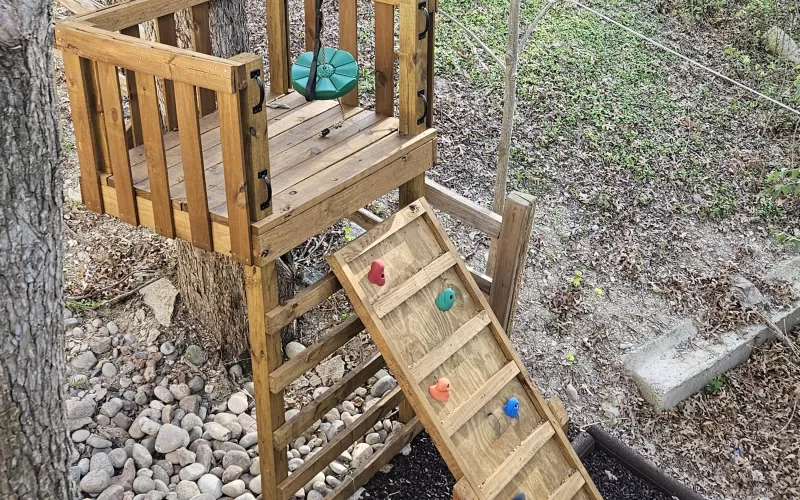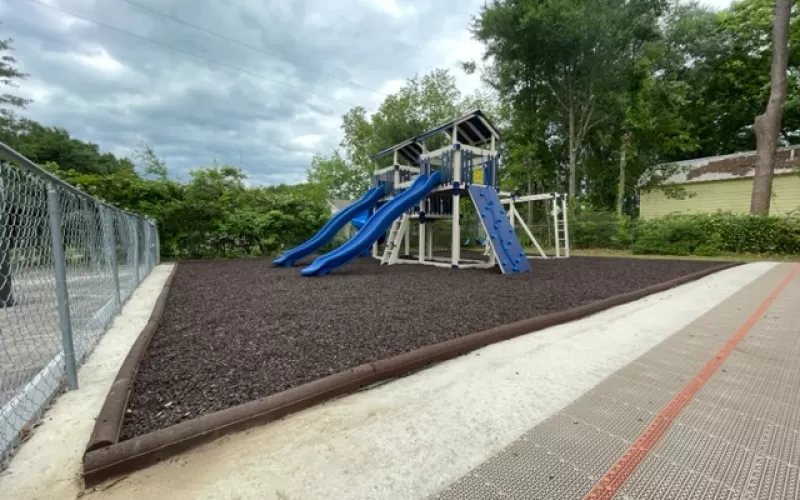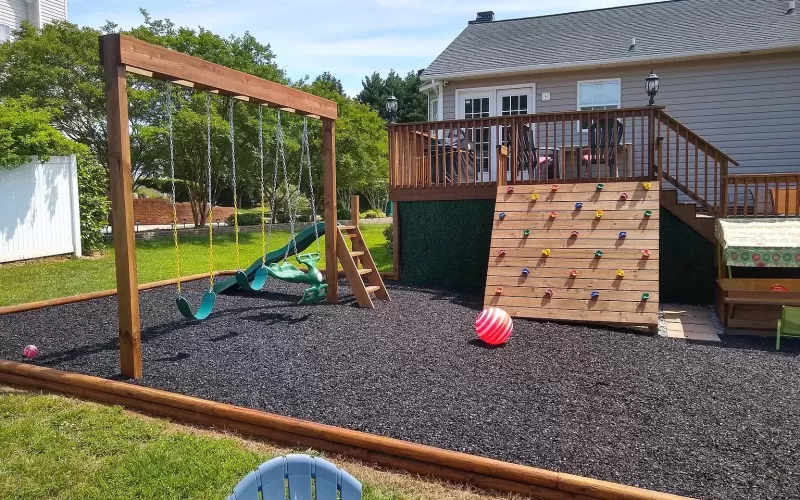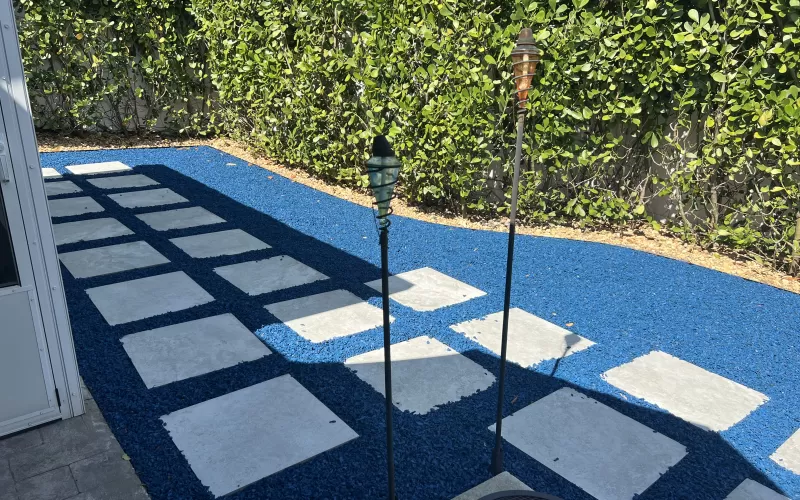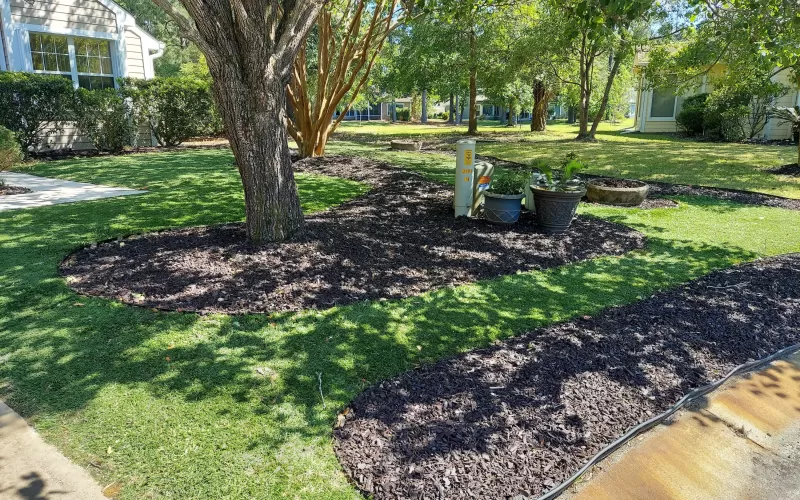
Landscape fabric is also known as geotextile fabric, filter fabric, weed barrier, and weed blocker. Each of these names may point to some different functions/performance characteristics of the fabric. We get a lot of customers asking us if they need to lay down landscape fabric as part of their rubber mulch installation for their garden, landscaping, playground, or other application. While it's not required, we believe it is a best practice to do so for many good and beneficial reasons. This article will detail:
- 3 reasons why we recommend landscape fabric
- How to install landscape fabric
- How much landscape fabric to purchase
- What kind of landscape fabric to purchase
- Where to purchase landscape fabric
3 Reasons Why We Recommend to Install Landscape Fabric for Your Rubber Mulch Installation
1. Mitigates weed growth
One of the main attractions of landscape fabric is that the right type of landscape fabric will serve as an excellent weed blocker. The landscape fabric in combination with the rubber mulch make for a potent weed inhibitor. Weeds need sunlight and water to grow so a weed fabric plus 2 or more inches of rubber mulch is a great way to keep sunlight from hitting the dirt. We recommend a weed fabric that is less transparent to block out as much light as possible, even if the rubber mulch will block the sunlight. Some weed fabric is grey and allows for more light to pass through which means weeds will have greater probability to grow than with a fabric that is darker/more solid. Also, you never know when a rubber mulch covered area will become a shallow spot for whatever reason, allowing more light through so you want to make sure the fabric itself performs. Landscape fabric + rubber mulch is not guaranteed to prevent weed growth. For example, birds may drop weed spores on top of the rubber mulch or fabric. While rubber mulch is not a hospitable host, some weeds figure out how to thrive in the toughest conditions. With that said, landscape fabric + rubber mulch will do a great job to severely mitigate weed growth. This system will make your life easier, your yard more beautiful, and ideally eliminate the need to spray harmful weed chemicals.

2. Separates dirt from rubber mulch
The second reason we recommend laying down a landscape fabric underneath your rubber mulch is to separate the dirt from the rubber mulch. Your rubber mulch will arrive as beautiful clean nuggets in the vibrant color that you picked. When you lay it down it will look so fresh and clean and have a really appealing allure in your landscaping. We want you to keep it this way and one way to do that is to simply not get it dirty. First without landscape fabric, your rubber mulch is going to get dirty during the installation by kicking up dust and dirt when pouring the rubber mulch on to it. Then over time some of the rubber mulch is going to eventually mix with the dirt either organically, through foot traffic, or via raking and it will lose it luster. Additionally, if your rubber mulch becomes a mixture of rubber mulch and dirt, it will become a much more welcome host to insects and weeds as opposed to when the rubber mulch is separated from the dirt with a landscape fabric. With the landscape fabric you will avoid the mixing which will leave the rubber mulch beautiful for a longer period of time and decrease insects and weeds. The landscape fabric will also make maintenance almost non-existent because the mulch will stay cleaner and if you need to rake it over, it will just make the job easier because of the separation.

3. Prevents rubber mulch from embedding in the dirt
Similar to point 2 above but distinct, a landscape fabric is going to prevent the rubber mulch from sinking in to the dirt over time. In terrain that has softer soil or sandy soil, this will be more beneficial. It will also be more prevalent in applications where the rubber mulch will see foot traffic. The landscape fabric provides a separation layer with a large surface area that will prevent embedding.

So in summary, using a landscape fabric underneath your rubber mulch has multiple benefits:
- it reduces weed growth and insect proliferation
- it contributes towards a long lasting fresh and vibrant look
- it helps to prevent any sinking or embedding under certain soil conditions
Sure, it will take bit more effort in installing the rubber mulch but we think when weighing the time-cost-effort against the long term benefits, you will receive value from it. On the other hand we do have many customer that do not put a landscape fabric underneath and are also happy.
As a supplement, you may have a few additional questions regarding landscape fabric. Below we answer some additional questions that we often come across:
How do I Install the Fabric?
We recommend to first clear the area from any existing weeds, rocks, or grass before laying down landscape fabric. As such this will help to prevent future grass/weed growth and prevent any sharp objects from piercing the fabric. Next you will want to determine the direction you are laying down the landscape fabric. Often this is fairly simple because the width of your garden bed may only be a few feet wide so you will want to lay the fabric down like unrolling a red carpet all the way down the "lane" of the bed instead of cutting a ton of short strips to lay next to each other. So if you have a 4' wide garden bed and a 4' wide fabric roll, you want to match up the widths and roll out the fabric down the longer length of the bed like rolling out that red carpet. This will minimize seams / cutting and make installation easier. With wider and longer areas the direction at which you roll out the fabric can determine whether you will have sufficient fabric or fall short so make sure to plan that out by drawing it out on a piece of paper. Next you will lay the fabric down and if you have multiple lanes of fabric in your area, you will want to overlap the fabric at the seams by at least 3 to 6 inches. So if you have a 4 foot (48") wide roll, you will want to at least have your 1st "lane" of landscape fabric overlap the next adjacent "lane" of landscape fabric at the 45" to 42" wide mark. You will need to hold the landscape fabric down during installation using landscape fabric pins (aka staples) which are usually steel pins that have a "U" type shape. You will follow the directions per the specific landscape fabric you purchased to determine how far apart to place each pin. We recommend every 3' to 4' but some people like to put the staples every 1'. Cut the landscape fabric with scissors as needed to meet the shape and size of your area. If plants are small enough you can cut an X in the fabric like in the photo below and put the fabric over the plants. If plants are larger and more established, you may need to cut out shapes at the edge of the fabric and make the seam run along where the plant meets the dirt, joining two pieces of fabric in this manner around plants.
*If installing landscape fabric underneath rubber mulch for a playground, then you will want to compact the earth first if possible with a hand tamp or other tool. For playground installations, you can also use compacted stone or drainage rock under the landscape fabric.

How Much Do I Need?
To determine how much landscape fabric you need, you will need to know the square footage of the area you are covering. For example if it is a square or rectangular area, measure the length and width in feet and multiply those 2 numbers together to get your square feet. You will then need to understand what size landscape fabric roll you will be purchasing. For example some common size rolls are 3' wide x 100' long (300 square feet) or 4' wide x 100' long (400 square feet). Take the square footage of the area you are going to cover and divide that by the square footage of the roll to determine how many rolls you need. For example, let's say you have a 30' x 4' flower bed, which is 120 sq ft (30 x 4 = 120). Divide that by a 4' x 50' roll and you get 120 / 200 = .6 which means you will use .6 or about 2/3 of the roll. If the resulting number is 1 or larger then you will need more than 1 roll. Here is another example, let's say you have a 30' x 30' playground or flower bed, which is 900 sq ft (30 x 30 = 900). Divide that by a 3' x 100' roll and you get 900 / 300 = 3. So you may think you will need 3 rolls -- 3' x 100' rolls -- for that project. However, because the width of the role is only 3' wide, you will be installing multiple lanes of landscape fabric in the space, which means you will have seams and overlapping. Because there will be overlapping, exactly 3 rolls will not be enough. You will need to order an additional roll of 3' x 50' or 3' x 100' to ensure you have enough excess. You can calculate the exact square footage you need by drawing it out and accounting for the amount of fabric used in the overlap at the seams.

What Kind of Landscape Fabric Should I Use?
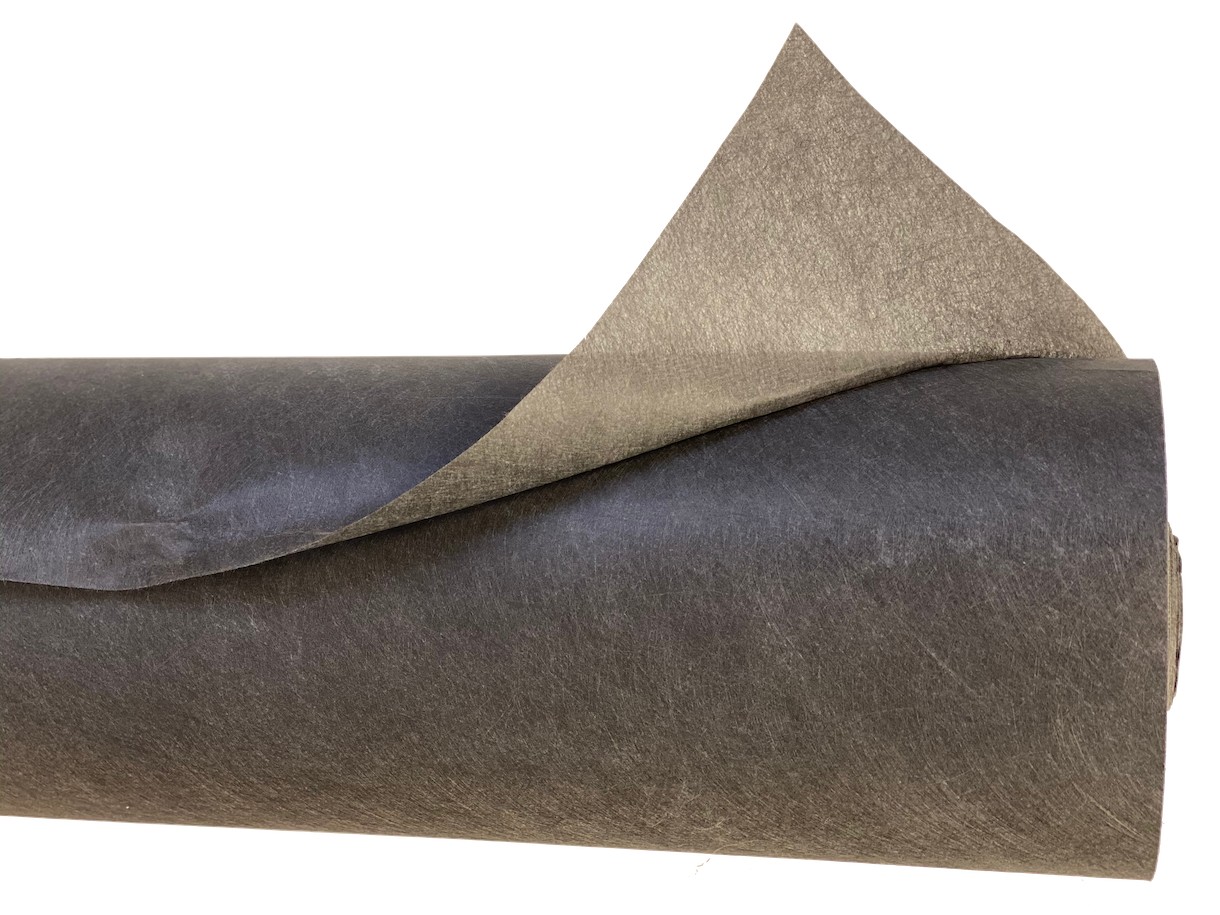
We recommend a spunbond landscape fabric that is 3 oz in weight for most common landscaping, garden and playground applications. The spunbond fabric is a non-woven design that allows for more water penetration than a woven landscape fabric. This is important so water won't pool up and can be absorbed in to the ground for drainage and also so plant roots can drink. The spunbond fabric also has great strength to support the demands of the rubber mulch. We also like to see a darker more solid fabric that will prevent sunlight from penetrating to help further mitigate weed growth. Typically, a grey fabric will not have the UV protection that a black fabric will have and thus the grey fabric will not be as durable. A higher quality fabric will have a longer lifespan but will also cost more. Additionally, leaving the fabric exposed to sunlight will reduce the longevity of the fabric.
Where Can I Purchase Landscape Fabric?
Not all fabrics are made the same. You will find a lot of selection out there in terms of materials, quality, specs, manufacturing locations (e.g. China). This can lead to overload as to what type of fabric is the right one to select. Many of the big box stores sell paper thin fabric that can be difficult to install and may not last long. You can also find a lot of inferior quality fabric from China online. We sell made in the USA premium fabric that is high quality, durable, and perfect for most home and commercial garden, landscaping, and playground applications.
We offer a wide select of sizes too from small to large which is especially good for larger areas. Don't buy a bunch of 3' x 50' rolls for larger areas just because that is what is offered somewhere else. We offer up to 15' wide folded rolls which makes installation a breeze.
We also now offer 3' x 50', 4' x 50', 3' x 100' and 4' x 100' sized rolls for quick and easy purchase through our shopping cart online here:
Shop our Landscape Fabric for Playgrounds
Shop our Landscape Fabric for Landscaping