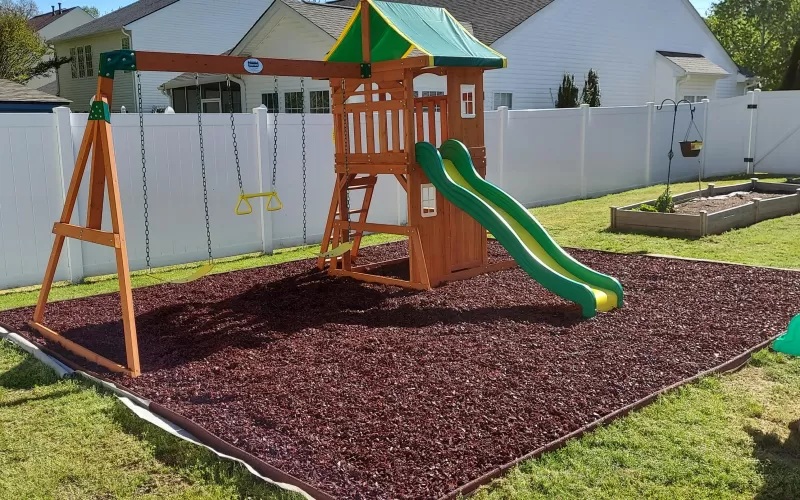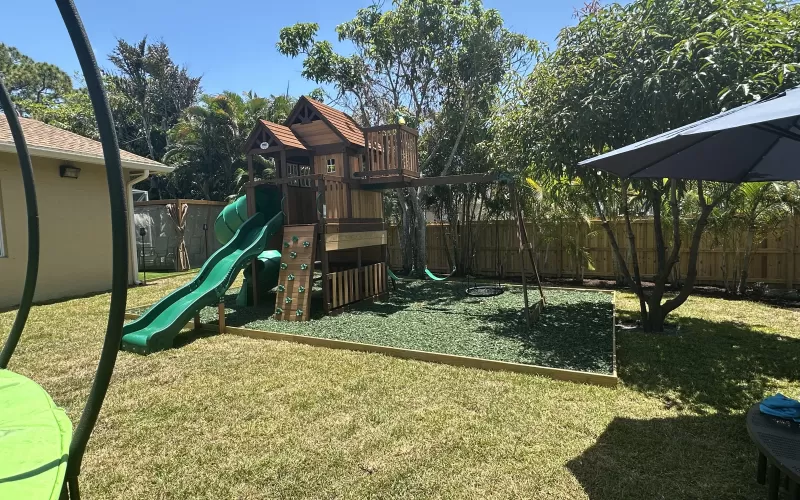
Yes, rubber mulch is safe for landscaping, playgrounds, equestrian footing, and many other applications. While rubber mulch is gaining in popularity everyday, when it comes to landscaping rubber mulch has been successfully in use for landscaping applications for 20+ years. Rubber mulch has a long history of use in a wide variety of environments for both residential and commercial landscaping applications. Across the United States there are a number of climates, soil types, and plant species and rubber mulch performs great across the board. Additionally, there have been plethora scientific studies performed by both the federal government and states regarding ecological safety which we discuss in more detail below. This article covers some of the questions and concerns that come up regarding rubber mulch usage in landscaping:
- What are the Benefits of Landscaping with Rubber Mulch?
- Is Landscaping with Rubber Mulch Good for the Environment?
- Is Rubber Mulch Toxic?
- Should I be Concerned With my Landscaping Catching on Fire?
- Who is Saying that Rubber Mulch is Bad for Landscaping?

What are the Benefits of Landscaping with Rubber Mulch?
Rubber mulch has many benefits which will help your landscaping safely thrive. These benefits include:
- Reduced weed growth by eliminating hosts like wood and other organic material present in wood mulch.
- Reduced pest infestations. Most pests have no desire to live in rubber. Rather they prefer the wet, wood environment of wood mulch. Thankfully the all important earth worm lives below the surface in the soil and bees, butterflies, and other beneficial insects interact with the plants themselves.
- Reduced crown rot by eliminating a constantly moist environment around the base or crown of plants and trees.
- Reduction in incidence of roots growing above soil level, which is a phenomenon of roots improperly growing into wood mulch above soil levels.
- Increase in fertilizer penetration especially when compared to slow decomposing wood mulch where fertilizer will just sit on top of the wood mulch.
- Reduced incidence of fungus and mold stemming from constantly moist wood mulch.
- Providing a protective thermal insulating layer for soil, keeping soil at the right temperature and humidity year round. Rubber mulch doesn't get too hot and it doesn't freeze. In fact it does not conduct heat well because it is manufactured from of recycled tire which is designed to limit heat transfer from the hot road, friction, and harsh environmental conditions. As a result it makes for a great insulting layer for plants to keep root systems healthy.
- Increased water and nutrient access as water will run through rubber mulch in to the soil as compared to running off the top of wood mulch.
We provide more detail about the benefits of landscaping with rubber mulch here.
Is Rubber Mulch Toxic?
The rubber mulch we sell is coated with a water based non-toxic colorant that is safe and will not harm your flowers, plants or landscaping. Material Safety Data Sheets are available upon request.
What about what's inside the tire itself? The EPA and CPSC have conducted research on the impacts of tire shreds. Why? Because uncoated ground-up tire is widely used in many applications around the world and has a long history of use - for example it is used as infill in synthetic turf fields on almost every school, college, and professional sports field that has turf. It is also widely used in road engineering applications in large quantities. As a result it is important to understand the impact of recycled tire on humans, water, ecology, and the environment in general. The EPA and CPSC, along with a number of states (for example 2 environmentally conscious states: WA and CA), and other research like this study, did not find that rubber mulch was unsafe for humans or plants or that any exposure levels exceeded safety recommendations or regulations.
Anecdotally, we have shipped large volumes of rubber mulch and our customers have had positive feedback on the performance of the rubber mulch in their landscaping. The proof is in the pudding as we have many recurring customers, including supply yards, landscapers and contractors where it is crucial to work with a product that performs well and is safe. Here is another perspective on the topic: there are many other every day products like exterior residential paint and metal roofing which contain some of the same compounds that are used in tires. Rain water runs off your house on to your grass and landscaping frequently without impact. The myth that rubber mulch will kill your plants is just that, a myth. In fact the opposite is true in that rubber mulch helps plants thrive through increased water to soil, great insulation properties, and mitigation of weeds and pests.
As with any product it is important to understand the uses and impacts - for example, even the chemical composition of wood mulch, in some contexts, can be harmful to your landscaping according to this article. There are some wood mulches that can cause negative allelopathy to your landscaping such as those made of Black Walnut, Eucalyptus, Pepper Trees, Tree of Heaven and possibly Cedar. This means mulch made of these woods may suppress seeds and plants from growing. Another example cited is using mulch with wood chips that are fresh and haven't had time to compost or decompose - this can produce nitrogen deficiencies and harm your plants.
View this list of 3rd party safety research on the topic.


Is Landscaping with Recycled Rubber Mulch Good for the Environment?
Yes, every bag of recycled rubber mulch you use in your landscaping and garden eliminates 1 tire from landfills. With the long lifespan of rubber mulch, frequent reapplication or "re-mulching" is eliminated. Using wood mulch typically requires reapplication up to twice per year and this comes with a heavy carbon footprint due to the production and transportation of wood mulch associated with each re-application. Not to mention, nothing is eliminated from land fills when using wood mulch.
Should I be Concerned With my Landscaping Catching on Fire?
You should not be concerned with your landscaping catching on fire with normal use of rubber mulch. There is a lot of misinformation and nuance so we are here to let you know the truth. The good news is that rubber mulch is not considered to be a flammable material as tested under the Federal Hazardous Substance Act (16 CFR 1500.44).
However just because the material is not considered to be flammable under the parameters of 16 CFR 1500.44, it doesn't mean that the material can't catch on fire. Rubber mulch like all wood mulches can catch on fire. Rubber mulch however has a relatively high ignition point (260 - 316 degrees F) to make it combust, or catch on fire, and its ignition point is higher than some wood mulches. This makes a lot of sense because rubber mulch is made from recycled tire and tire is specifically design to withstand the high heat and friction associated with driving. So here is a real world example of what this means... there was a study conducted on how discarded lit cigarettes impacted different mulches. Rubber mulch never caught on fire during the tests while certain wood mulches like composted yard waste, shredded pine bark, shredded cypress bark, and oat straw did.
There was another study which evaluated the combustibility of the different mulches, including wood and rubber mulches. This test was not about ignition but about what happens when the mulches already reached combustion or were on fire. When looking at rate of spread of fire, this study found that certain wood mulches performed worse than rubber mulch and some better. For example, pine needles and shredded red cedar had a much quicker rate of fire spread than rubber mulch.
Another point to consider is that under certain circumstances, wood mulch can actually spontaneously combust while rubber mulch cannot. Wood mulch can actually accumulate heat at certain depths and start smoldering which then converts to fires.
With mulches, whether it is wood or rubber, it is always good to maintain distance from fire pits, open flames, areas prone to wildfire, or other fire hazard areas. However in other areas under normal, safe usage, when using wood or rubber mulch for your typical landscaping project, you should not be concerned with your mulch catching on fire.


Who is Saying that Rubber Mulch is Bad for Landscaping?
We have seen that businesses which profit from the sale, transport, or perpetual re-application of wood mulch may not always like rubber mulch and in some instances spread misinformation about rubber mulch. Their negative position on rubber mulch stems from a financial perspective, where they are losing money due to the rise in popularity of rubber mulch. For example, when someone buys rubber mulch, instead of wood mulch, these businesses lose out on years and years of recurring revenue associated with the sale, transport, labor, and supplemental services associated with wood re-mulching. Due to rubber mulch's popularity and effectiveness, the businesses that have profited from the sale and re-application of wood mulch are seeing more and more consumers adopt rubber mulch because of its favorable return on investment and proven efficacy in landscaping applications. As a result these businesses spread negative and misleading information about rubber mulch in an attempt to keep you on or return you to the re-mulching money wagon!